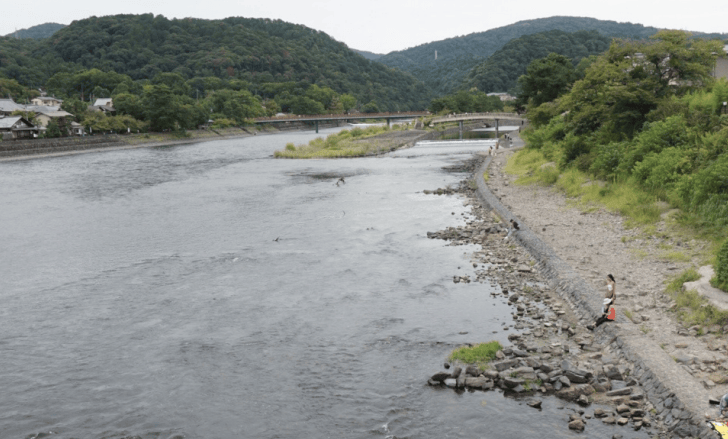
The Uji-bashi Bridge, which connects both side of the town, is said to be one of Japan’s oldest bridges first built more than a thousand years ago. Standing there, you can see locals walk, cycle
or laying a picnic mat just by the river everyday, and from the center, you can see the river split into two currents that reunite further downstream. It is one of those views that feels familiar
yet deeply peaceful each time you visit.
Murasaki Shikibu Monument
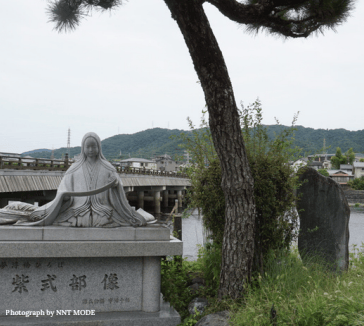
Not far from the bridge sits the Murasaki Shikibu Monument, a statue dedicated to the
author of The Tale of Genji. Uji plays a special role in her story, as the last ten chapters of the novel were set here. The statue of Murasaki faces the river, her expression calm, as if she is still lost in thought. Many visitors stop here for a photo. Across the river, small street lined with cafés and matcha shops lead the way toward Uji’s
matcha culture. The smell of roasted tea leaves drifts through the air, mixing with the sweetness of soft-serve, creamy matcha and hojica lattesand fresh pastries. Many of these shops are family-run, each with their own charm and story.
We spend part of our afternoon stopping by a few of them after walking along the river.
Sitting by the window, and watching the water move while sipping matcha felt unhurried
and real. Every café had something special, some served seasonal parfaits layered with
matcha jelly and fresh cream, other focused on tea brewed the traditional way. Each stop
made us appreciate how Uji’s culture is not only about history but about the everyday beauty found in simple rituals.
If you have time, stop by one or two before sunset. Sit by the window with a cup of matcha
or a slice of roll cake and watch the light shift across the river. The pace of life feels slower
here, and every small detail, from the teacup in your hand to the sound of the current
outside, feels like a reminder to stay present.
Byōdō-in Temple, Uji
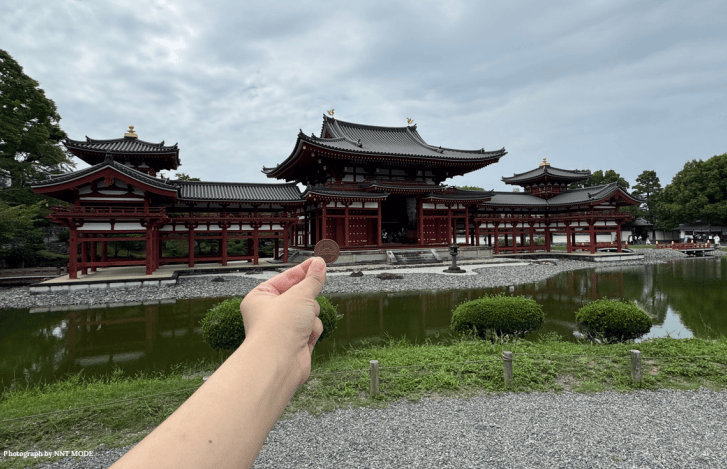
Byōdō-in Temple is one of Uji;s most visited landmarks and a sight that captures the beauty of
Kyoto’s history. It is rarely quiet, but even with the steady flow of visitors, there is something about
the view that still feels special. The reflection of the temple across the pond, the sound of footsteps
on gravel, and the sight of families and photographers scattered around give the place a calm kind
of liveliness. Originally built in 998 as a villa for the Fujiwara family, it was ater converted into a Buddist temple by Fujiwara no Yorimichi in 1052. The following year, the Phoenix hall was completed, and now the heart of Byōdō-in. Its design, with the wide pond in front and the open hall that seems to float above the water, is one of the finest example of Heian- period architecture that still stands today.
Inside sits the golden Amida Buddha statue, created by the sculptor Jōchō. It glows under the dim
light, surrounded by delicate cravings that show heavenly musicians playing their instrument. The
pond mirrors the building almost perfectly, especially in the late afternoon when the sun hits the
water. In spring, cherry blossoms line the path; in autumn, the trees burn orange and red, turning
the whole view into a painting. Despite the visitors, there is still a quiet respect that fills the space. People pause longer here, often standing by the railing watching the temple’s reflection without speaking. It is one of those places that reminds you how deeply beauty and faith are connected in Japanese culture.
Next to the temple, the Byōdō-in Museum Hōshō-kan displays original pieces from the site
including the bronze phoenixes that one sat on the rood and severals wooden doors and carving
preserved for centuries. The craftsmanship on displays shows how much care went into building
and maintaining this temple over a thousand years.
Fun Fact: The Phoenix hall is featured on Japan’s ten-yen coin, and the twin phoenix ornaments appear on the ten-thousand-yen note.
Sweet Stops Around Uji
Nakamura Tokichi Byodoin, Uji
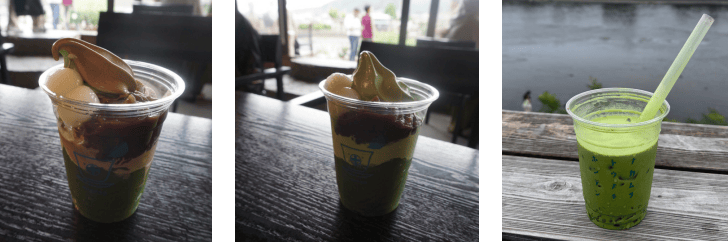
We stopped by Nakamura Tokichi Byodoin after visiting the temple and it quickly became one of our favorite matcha cafés in Uji. We tried the hojicha soft serve that came with jelly, red
beans, and a mochi ball. The flavor was deep and roasted, yet smooth and not too sweet. The textures blended perfectly together, making each bite light but satisfying. We also had the
matcha soft serve with jelly, which had a clean and refreshing taste with a natural matcha flavor that wasn’t bitter at all.
To complete it, we ordered the matcha latte ice cream with jelly, rich and creamy with a subtle tea fragrance. While eating and enjoying the desserts, we sat directly in front of the river.
Despite the crowds passing by, the atmosphere still felt calm. It was the kind of moment that captures what Uji is all about, simple, slow, and filled with matcha happiness.
Masuda Chaho, Uji
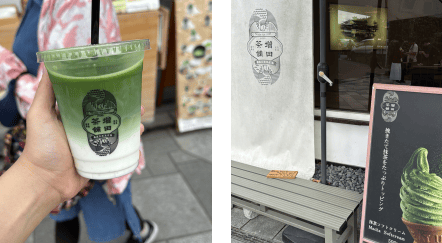
Masuda Chaho is a small tea shop right in front of Byodoin Temple. We
stopped by while exploring Uji and noticed a queue forming beside the
shop for their soft serve ice cream. The smell of matcha in the air
already made it hard to resist. We tried their iced matcha latte and it was really good. The taste was smooth, not overly sweet and not bitter either, just perfectly balanced. It had that clean, refreshing matcha flavor that makes you want to take your time with every sip, especially on a warm afternoon in Uji. You can also buy their matcha inside the shop, beautifully packed for gifts or to bring home. Watching people line up for their soft serve while sipping on our drinks felt like such a simple but perfect Uji moment. It is definitely worth a stop if you want to experience authentic matcha made right where it grows.
Hatoya Kyoto, Arashiyama
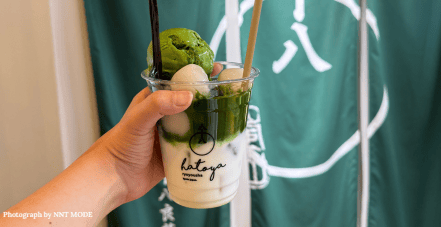
Hatoya Kyoto is a short walk from the main street of Arashiyama. We
stopped by for a quick break and tried their matcha latte topped with
soft serve ice cream and mochi balls. The matcha was smooth and rich, not overly sweet or bitter, with a clean flavor that felt perfectly balanced. The soft serve melted into the
drink, giving it a creamy texture, while the mochi added a soft, chewy
bite that made it fun to enjoy. It was simple, refreshing, and exactly what we needed after exploring
Arashiyama. Hatoya Kyoto is a lovely stop for anyone looking to enjoy
good matcha in a cozy, relaxed setting.

