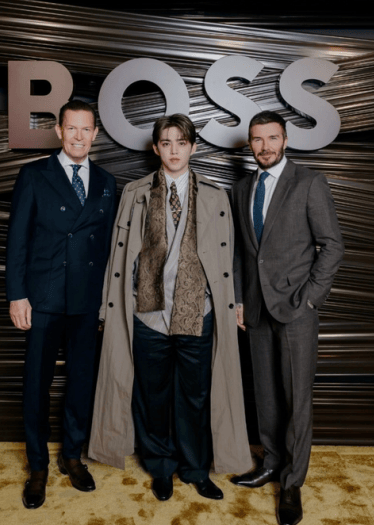
At Milan Fashion Week, BOSS approached the season with a quieter sense of control, returning to tailoring with a focus on how it moves, rather than how sharply it defines. The show
unfolded at Rubattino56 on 26 February, built around a restrained palette of grey, black, and camel, where everything felt deliberate without trying too hard.
The front row carried that same energy. David Beckham appeared alongside S.Coups of SEVENTEEN, bringing together different expressions of modern menswear, one grounded in
heritage, the other shaped through a more fluid, contemporary lens.
On the runway, tailoring stayed at the centre, but it didn’t feel rigid. Suits were cut with precision, shoulders defined, lines clean, but styled with a sense of ease. Shirt and tie
combinations sat beneath heavier outer layers, creating a contrast between structure and softness. It wasn’t about undoing tailoring, but easing it, letting it sit more naturally on the
body.
Fabric carried much of that shift. Coats and overshirts came through in brushed alpaca and cashmere, holding their form while still feeling soft in movement. There were also subtle
introductions of ostrich textures, not overpowering, but enough to add dimension when seen up close. The collection stayed quiet, relying on material and silhouette rather than
statement. Layering introduced a slight imbalance that felt intentional. Bulkier outerwear sat over more formal foundations, creating a look that felt composed but not overly controlled. It leaned
into how tailoring exists outside of strict formality, worn, adjusted, and lived in.
Archival details surfaced subtly. Paisley and geometric patterns appeared through scarves and pocket accents, adding depth without drawing focus. They felt like fragments of the
past, placed into a more current context.
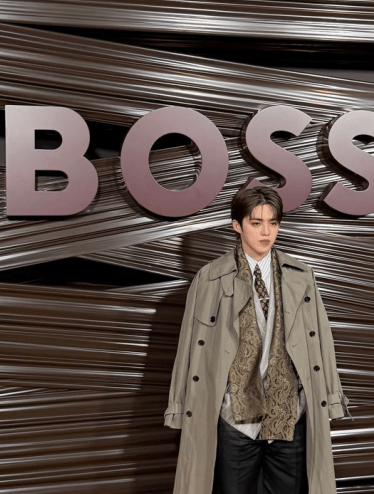
SEVENTEEN’s leader S.Coups moved within that same direction. His look was built on familiar pieces, but styled with a softer hand. A striped shirt and patterned tie formed the base,
structured but not stiff, while a fitted waistcoat added depth. Over it, a long paisley scarf was draped loosely, softening the overall line and breaking the sharpness of the tailoring.
A beige trench coat, worn open, framed the look rather than shaping it. It brought movement into the silhouette, allowing each layer beneath to remain visible. Black trousers with a
slight sheen grounded everything, adding contrast against the softer textures above.
What holds it together is the balance. The pieces themselves are classic, but the way they are worn shifts the tone. It feels polished, but not fixed, more like tailoring that moves with
the person rather than being held in place.
Across the collection, that same idea stays consistent. Structure is still there, but it gives way slightly. Nothing is overworked. It feels considered, but easy

